01 / QUALIFYINPUT

Cell qualification
Confirm cell identity, source documents, sample evidence and operating constraints.
- Source traceability
- Application envelope
32700 series · sodium-ion cylindrical cell
A cylindrical sodium-ion cell format for OEM battery modules, custom packs and stationary energy-storage development.

Product overview
We evaluate the cell together with the electrical, mechanical and environmental requirements of the final application—not as an isolated catalog item.


Cell qualification inputs
Cell identity, current documentation, load, temperature and the intended module architecture are reviewed together before sample or quotation discussion.
Request Product ReviewTechnical status
Numbers are published only when they can be traced to an approved source. This keeps sample observations, test conditions and production specifications from being mixed together.
Read our evidence approach →Engineering pathway
Three connected engineering gates turn a qualified cell into a project-ready battery proposal. Each gate closes a different risk before moving forward.
Confirm cell identity, source documents, sample evidence and operating constraints.
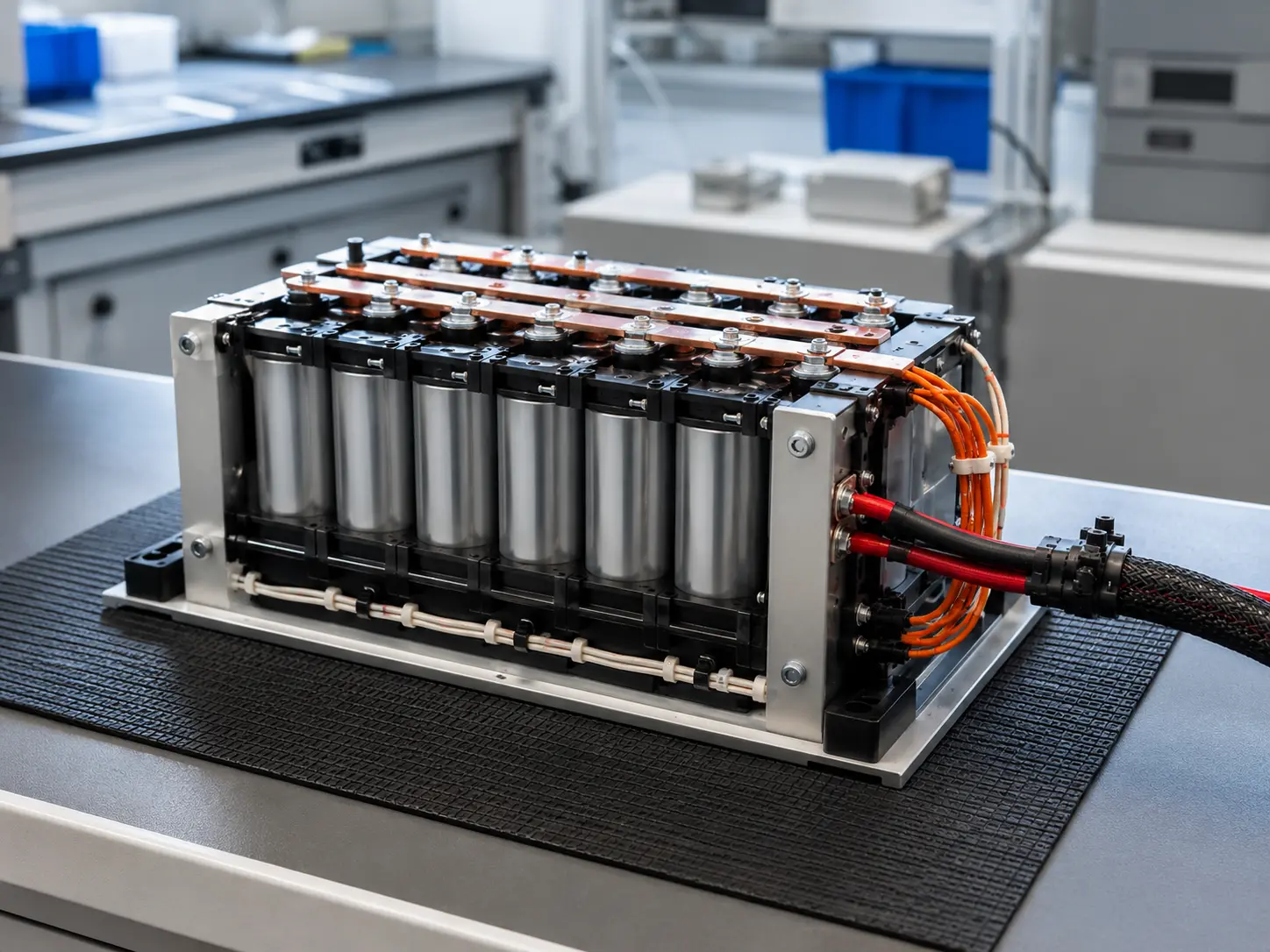
Define series/parallel structure, retention, sensing and electrical connection. See the sodium-ion module integration scope when the buyer needs a connected assembly rather than loose cells.
Close the BMS, enclosure, interfaces, thermal conditions and compliance pathway.
Evidence before claims
Requested records may cover electrical behavior, low-temperature discharge, high-rate discharge, cycle testing and safety-related evaluations. No result is treated as available or verified until the exact product, source, test condition, revision and release status have been checked.
Evaluate 32700 sodium-ion cells for low-temperature applications →
Application fit
Technical FAQ
Use these answers to prepare your first inquiry. Final suitability is confirmed against the actual project conditions.
It is a cylindrical sodium-ion cell format intended for integration into battery modules and packs. Final electrical performance depends on the specific commercial cell and its current technical documentation.
Potential uses include industrial battery systems, stationary energy storage, backup power and application-specific packs. Suitability must be checked against voltage, current, temperature, runtime and mechanical requirements.
A 32700 sodium-ion cell may be considered for low-temperature discharge evaluation, but this page does not publish a verified temperature rating. Suitability requires an identified cell and source record covering SOC, load, cutoff and cold-soak conditions; review the low-temperature battery page before specifying a pack.
Yes, subject to engineering review of series/parallel configuration, BMS, enclosure, electrical interfaces, thermal conditions, compliance needs and expected quantity.
Submit the application, required voltage, capacity, current, temperature and quantity through the technical RFQ form.
Sample availability follows product identity, project fit, requested quantity and the evidence package available for review. Submit the intended application and test objective so the appropriate next step can be confirmed.
Confirm the exact product identity, current technical specification, applicable test evidence, handling or integration guidance and the commercial supply status. Document availability is confirmed per project.
Technical guides
These guides explain the general technology, low-temperature evidence, chemistry comparison and cell-to-pack boundary. They do not replace the current datasheet or approved report for the exact 32700 model.
Understand material families, evidence levels and the questions that belong in a project brief.
Start with NIB fundamentals →COLD EVIDENCESeparate charge, discharge, storage and cold-start claims and review the complete test conditions.
Review cold-performance evidence →CHEMISTRY DECISIONCompare exact products on the same duty cycle, temperature, system scope and document basis.
Compare project requirements →SUPPLY LEVELClarify what 32700 means and which electrical, mechanical, BMS and compliance fields to request.
Prepare the technical RFQ →Learn the materials: how sodium-ion cells work, cathode material families, hard-carbon anodes, and cost and supply-chain boundaries.
Prepare an application review: use the battery and ESS intake worksheet. For cold-store vehicle enquiries, first define the truck, duty and charging boundary in the cold-chain and forklift guide; neither link implies this 32700 platform is approved for that application.
Buyer evidence check
Record the exact cell model, revision, voltage window, current limits, temperature conditions and report scope. A cell document does not establish module or system performance.
32700 technical inquiry
Share voltage, capacity, current, temperature, available space and expected quantity.
Start Project Review ↗